What is the quick answer?
Tired of low views? Learn how to get more views on YouTube Shorts with our playbook on viral hooks, retention editing, and data-driven fixes.
Key takeaways
- Why Most YouTube Shorts Advice Doesn't Work
- Vanity tips vs diagnostic signals
- What works better than hacks
- The Anatomy of a 10-Million-View Short
- The hook has one job
- The middle earns the watch
Overview
Most YouTube Shorts advice fails because it treats low views like a creativity problem. It tells you to use trending audio, post more often, or add bigger captions. That advice isn't useless. It's just incomplete.
The core problem is diagnosis. A Short doesn't usually stall because YouTube is randomly suppressing it. It stalls because the first audience it reaches doesn't respond strongly enough. That's why so many creators get trapped in the same frustrating zone: decent effort, decent editing, then a video that dies early and never gets a second push.
That pattern shows up so often it has a name. The “stuck at 500 views” problem usually points to weak early retention or a mismatch between the topic and the audience. According to ShortGenius's breakdown of low-view Shorts, 70% of these low-view Shorts have viewer retention under 40% in the first 15 seconds. That's not bad luck. That's a signal.
Creators who want a better publishing workflow often pair analytics review with scheduling tools like SleekPost social media management, because consistency matters more when you're learning from each post instead of throwing clips at the wall. The same principle applies on the production side too. If your process is chaotic, your testing will be chaotic. That's why a repeatable workflow matters more than endlessly polishing one clip, which is the argument in this video production system for creators.
Why Most YouTube Shorts Advice Doesn't Work
Generic Shorts advice sounds actionable because it's easy to repeat. “Use trends.” “Post daily.” “Keep it short.” The problem is that none of those tells you why one Short failed while another one moved.
That's why creators stay stuck. They don't lack effort. They lack a feedback loop.
Vanity tips vs diagnostic signals
A lot of advice focuses on surface-level inputs:
What changes results is learning to identify the specific failure point. If viewers leave early, your hook failed. If they stay for a few seconds and then drop, your premise didn't cash out. If the video holds attention but doesn't spread, packaging may be pulling the wrong audience.
Practical rule: Stop asking “Why didn't YouTube push this?” Start asking “At what moment did viewers decide this wasn't worth continuing?”
That question changes everything. It turns YouTube Shorts from a slot machine into a test environment.
- Trending audio: Sometimes helpful, but it won't rescue a weak opening.
- Fancy edits: Useful when they support the idea. Distracting when they replace the idea.
- More uploads: Valuable only if each upload teaches you something.
What works better than hacks
Creators who grow consistently treat each Short like a small experiment. They look at the opening frame, the title phrasing, the pacing of the middle, the last line, and the audience response. Then they adjust one variable at a time.
A better answer to “how to get more views on youtube shorts” is simple: build Shorts that hold attention, package them so the right audience understands them instantly, and diagnose misses with real metrics instead of vibes.
Most Shorts don't fail because they were invisible. They fail because the first viewers weren't convinced fast enough.
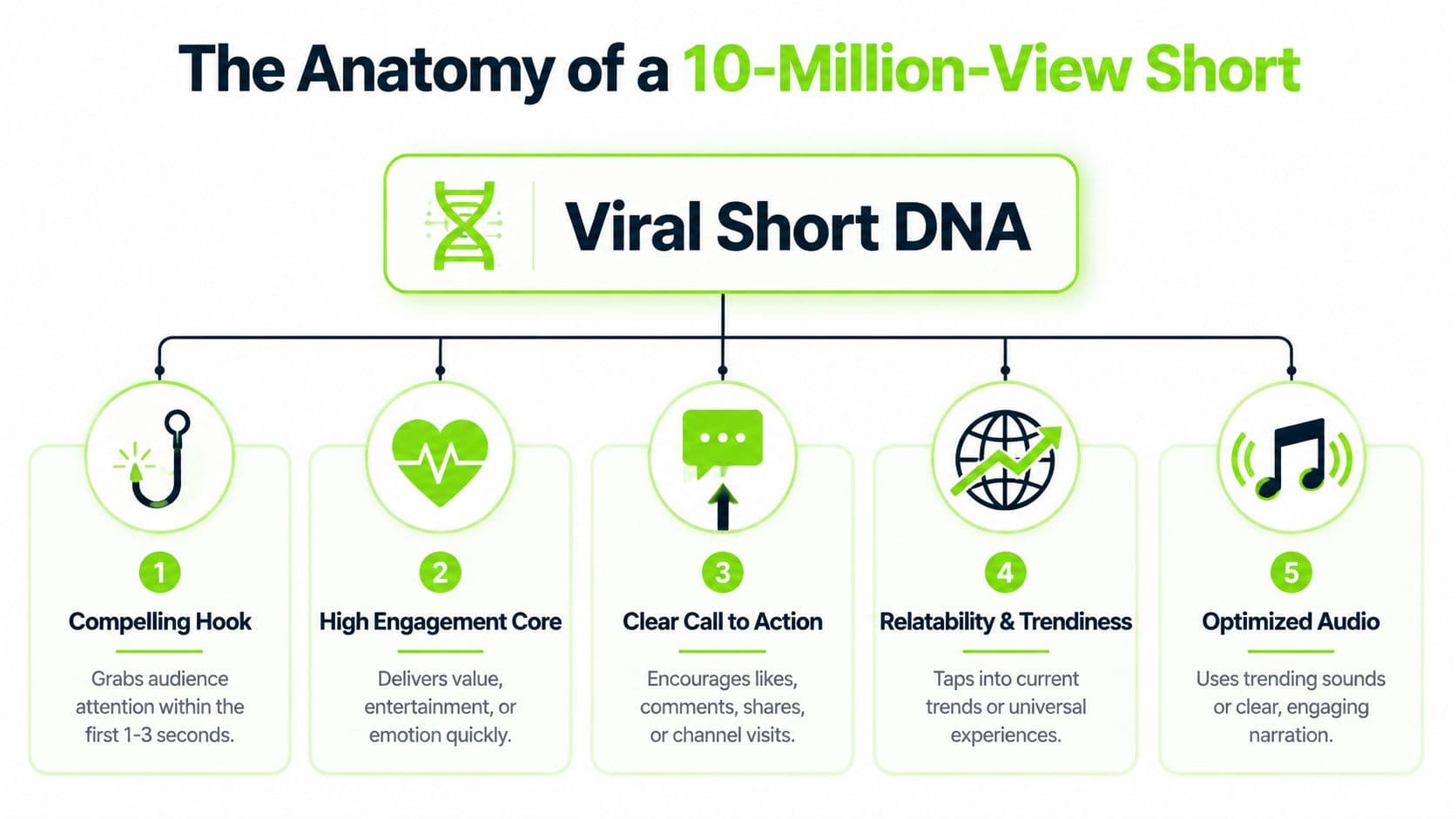
The Anatomy of a 10-Million-View Short
High-performing Shorts usually feel effortless when you watch them. They aren't effortless to build. They're structured.
The strongest format is a clean three-part sequence: hook, value, loop. VidIQ notes that the most effective Shorts use a strong hook, value delivery in the middle, and a looping ending that encourages re-watches. That structure matters because every second has a job.
For a deeper breakdown of how the opening affects feed performance, this guide to Shorts swipe ratio and the 81 percent rule is worth reading.
The hook has one job
The first seconds decide whether the viewer keeps watching or swipes away. A good hook doesn't explain everything. It creates an immediate reason to stay.
Strong hooks usually do one of these:
Weak hooks often sound like setup. “So today I'm going to show you…” is setup. “I tested three title formats and only one got picked up” is a hook.
- Show the outcome first: Lead with the result, then explain how it happened.
- Create an open loop: Start with a statement that feels incomplete until the viewer gets the next beat.
- Use movement with meaning: Motion helps, but only when it points attention to the core idea.
The middle earns the watch
A lot of Shorts get the opening right and then sag. The middle is where creators waste words, repeat visual information, or slow down to explain too much.
The middle should feel compressed. Every line should either add proof, advance the story, or deepen curiosity. If a sentence doesn't do one of those, cut it.
Here's a useful way to think about pacing:
| Part | What viewers need | What usually kills performance |
|---|---|---|
| Opening | A reason to stop scrolling | Long intros |
| Middle | Fast payoff progression | Repetition |
| Ending | Closure plus a reason to replay | Abrupt fade-outs |
The ending should loop, not fade
Most weak Shorts just stop. The best ones close the thought and subtly send the viewer back to the beginning.
That loop can come from a reveal, a callback, or an ending line that makes the opening mean something new. Rewatchs matter because they tell YouTube the Short held up on repeat, not just on first exposure.
If your ending feels like “that's all,” it's probably costing you views.
One practical creative habit helps here. Before editing, write your Short in three lines:
That forces clarity before effects, captions, or transitions get involved.
- First line stops the scroll.
- Second line delivers the core value.
- Third line creates the loop or payoff.
Packaging Your Shorts for Maximum Discovery
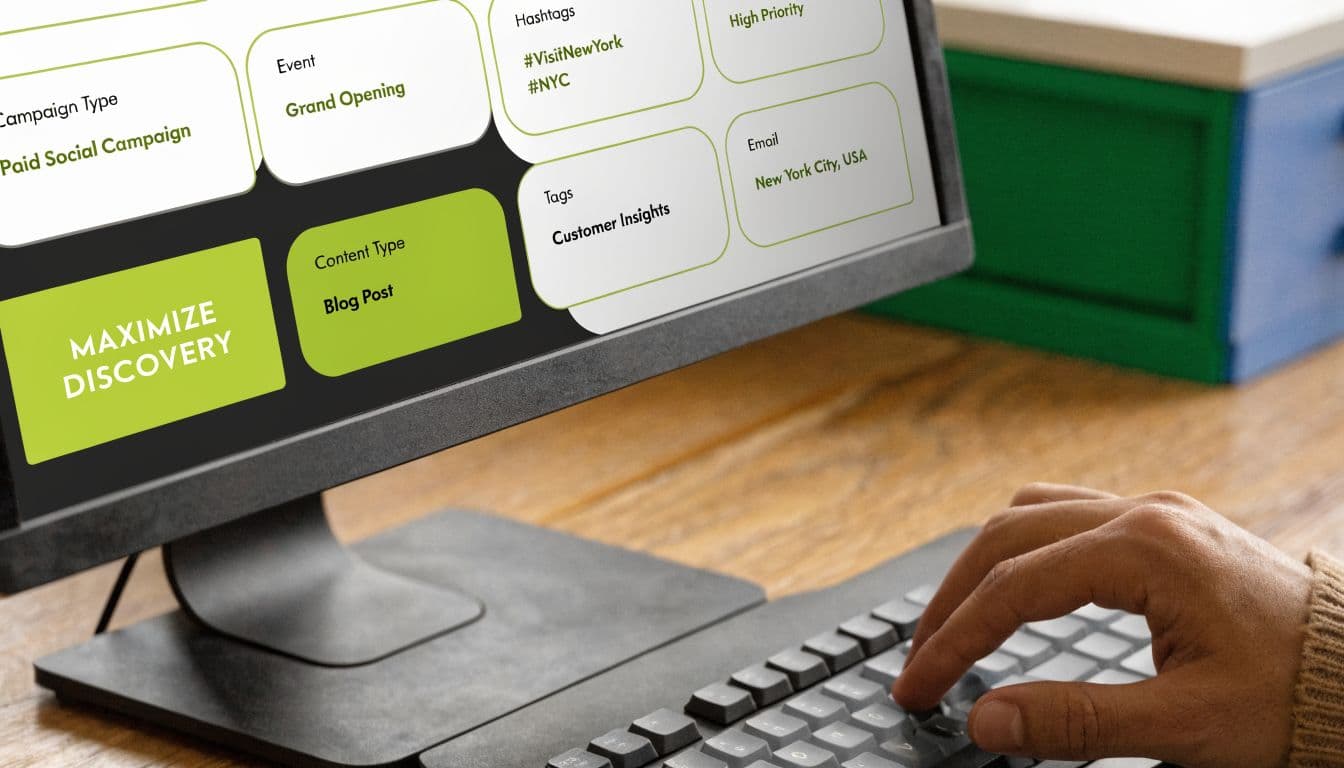
Good Shorts still get buried when packaging is vague. The title, caption, thumbnail choice, and hashtags don't just decorate the video. They tell YouTube what audience should see it first.
That's where a lot of creators lose reach. They make the content specific, then package it in generic language.
If you want to sharpen the visual side of packaging, this piece on what makes a good YouTube thumbnail is a practical companion.
Titles shape who YouTube tests first
One of the most useful packaging insights is that title phrasing changes the size of the audience YouTube predicts for your video. In a creator experiment, rephrasing a title from “quick workout tips” to “5-minute abs workout for beginners at home” expanded the perceived audience from 10K-50K to over 500K, leading to 5-10x more views, as explained in this YouTube breakdown on title phrasing and audience size estimation.
That doesn't mean “make titles longer.” It means make them clearer.
Compare the difference:
The stronger version gives YouTube more context and gives viewers a sharper promise.
- Weak: Morning routine tips
- Stronger: 3 morning routine mistakes that waste your first hour
- Weak: Editing hacks
- Stronger: How I cut dead space out of Shorts faster
Packaging choices that help instead of hurt
Titles are the main lever, but they aren't the only one. Use the rest of the packaging to support the exact same promise.
A clean setup looks like this:
Packaging shouldn't make a bigger promise than the video can keep. That gets you the wrong click and the wrong first audience.
A useful workflow inside a creator stack is to review search terms from YouTube Studio, draft a few title variants, and pick the one that is both specific and broad enough to travel. That's faster than guessing, and it keeps discovery tied to actual audience language.
- Caption: Short, readable, and aligned with the title. Don't write a paragraph nobody will read.
- Thumbnail frame: Even for Shorts, choose a frame that makes sense outside the Shorts feed. Avoid blurry mid-speech expressions when you can control the selection.
- Hashtags: Keep them intentional. The common working structure is #shorts, one broad category tag, and two niche tags, as noted in the earlier VidIQ source.
A Smarter Distribution and Posting Strategy
A lot of Shorts advice treats distribution like a volume game. Post constantly. Be everywhere. Flood the feed. That's how creators burn out and learn nothing.
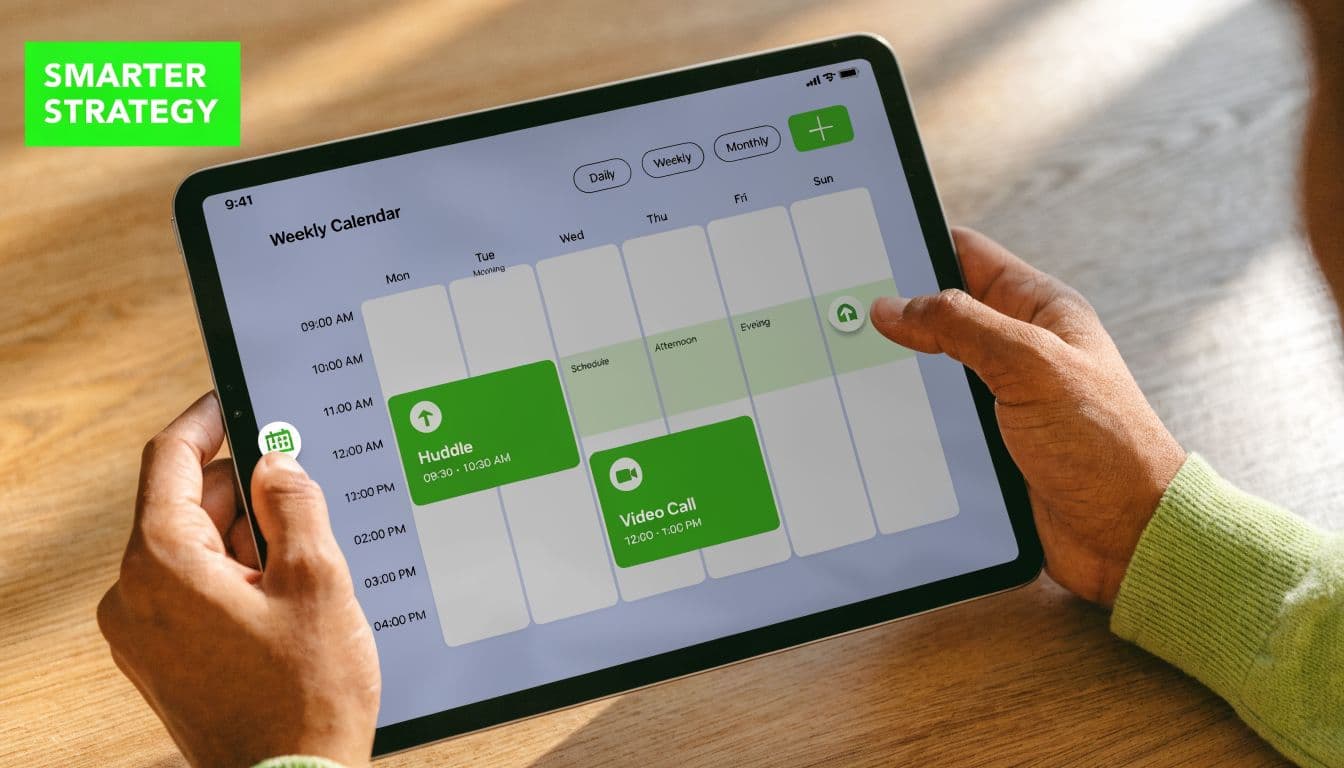
A smarter strategy is boring in the best way. Pick a pace you can keep. Batch when possible. Review the data, then adjust the system rather than scrambling every day.
For creators dealing with delayed distribution even after consistent posting, this article on Shorts not being pushed to feed after two weeks adds useful context.
What are the common questions?
What is the short answer for How to Get More Views on YouTube Shorts: The 2026 Playbook?
Tired of low views? Learn how to get more views on YouTube Shorts with our playbook on viral hooks, retention editing, and data-driven fixes.
What should creators do first?
Name the failure clearly. “Hook too slow” is useful. “Algorithm hated it” is useless.
Who is this guide for?
This guide is for YouTube creators, faceless channel operators, agencies, and teams using AI tools to improve video production and growth.
Action checklist
Apply this to your channel today.
- 1Name the failure clearly. “Hook too slow” is useful. “Algorithm hated it” is useless.
- 2Change one major variable. Rewrite the title, shorten the setup, or move the reveal earlier.
- 3Keep the rest comparable. That's how you learn what changed the result.