What is the quick answer?
Master the complete system for ranking videos on YouTube in 2026. This playbook covers keyword research, hooks, metadata, watch time, and analytics.
Key takeaways
- The Foundation Before You Film
- Stop guessing and start mining demand
- Validate the angle before you record
- Winning the First Click with Titles and Thumbnails
- The package decides whether the video gets a chance
- Build curiosity without becoming vague
Overview
Most creators still treat ranking videos on YouTube like a bag of disconnected tricks. Better tags here, a thumbnail tweak there, maybe a longer description if they remember. That's why they stay stuck.
YouTube rewards systems, not isolated hacks. It has confirmed that watch time is a primary ranking factor, and an analysis of 1.3 million videos found the average first-page result is 14 minutes and 50 seconds (Increv on YouTube ranking factors). That one detail alone flips a lot of old advice on its head. Shorter isn't automatically smarter. Better packaged, better structured, and better retained is smarter.
If you want to get serious about ranking videos on YouTube, think in flywheels. The idea shapes the package. The package earns the click. The click creates a chance at retention. Retention creates stronger engagement. Analytics tell you what to fix so the next video starts from a higher baseline. Miss one part, and the whole machine weakens.
The Foundation Before You Film
Most weak YouTube strategies fail before the camera turns on. The problem usually isn't production quality. It's that the creator made a video they wanted to publish, not a video people were already trying to find.
That's the myth of the lone genius creator. It sounds romantic, but it's a bad growth model. Ranking videos on YouTube starts with demand mapping.

Stop guessing and start mining demand
One of the simplest free methods is the Underscore Technique. Type an underscore and a space before a topic in YouTube search, such as _ youtube seo, and YouTube will reveal real phrases users search for. That gives you language straight from the audience instead of made-up keyword ideas from your own head, as described in this breakdown of the Underscore Technique for YouTube SEO.
That method gets stronger when you pair it with a content gap check. Look at the top results and ask:
Practical rule: Don't greenlight a topic until you can explain exactly what search demand it serves and why your version deserves to exist.
A lot of creators skip this part because it feels less exciting than filming. That's a mistake. Research is what prevents wasted uploads.
- Are the leading videos old: If the top videos are over 6 to 12 months old, there may be room for a fresher, sharper version.
- Are they thin: A ranking video can still be weak. Some top results are shallow, poorly titled, or visually dated.
- Are they mismatched: Sometimes the search intent says “guide,” but the top videos are opinion pieces or quick takes.
Validate the angle before you record
A topic can be good and still fail if the angle is too broad. “YouTube SEO” is a topic. “YouTube SEO for faceless tutorial channels” is an angle. Angles make videos clickable, searchable, and easier to script because they force relevance.
A simple pre-production blueprint looks like this:
If you want a useful companion read on the practical side of packaging a finished upload, these HypeScribe YouTube upload tips are worth reviewing before you publish.
For creators building around search-first content, it also helps to think bigger than a single upload. A niche cluster strategy gives each new video more contextual support over time. This breakdown on dominating a niche with a YouTube monopoly strategy is a good example of how to turn scattered ideas into a tighter content map.
- Find the query: Pull phrasing from YouTube search suggestions.
- Study the winners: Open the top results and note what they cover, what they miss, and where they drag.
- Choose one promise: Your video should solve one clear problem better than the current options.
- Design the proof: Decide what examples, screenshots, or walkthroughs will make the promise believable.
Winning the First Click with Titles and Thumbnails
A brilliant video with weak packaging is invisible. That's not harsh. That's just how YouTube works.
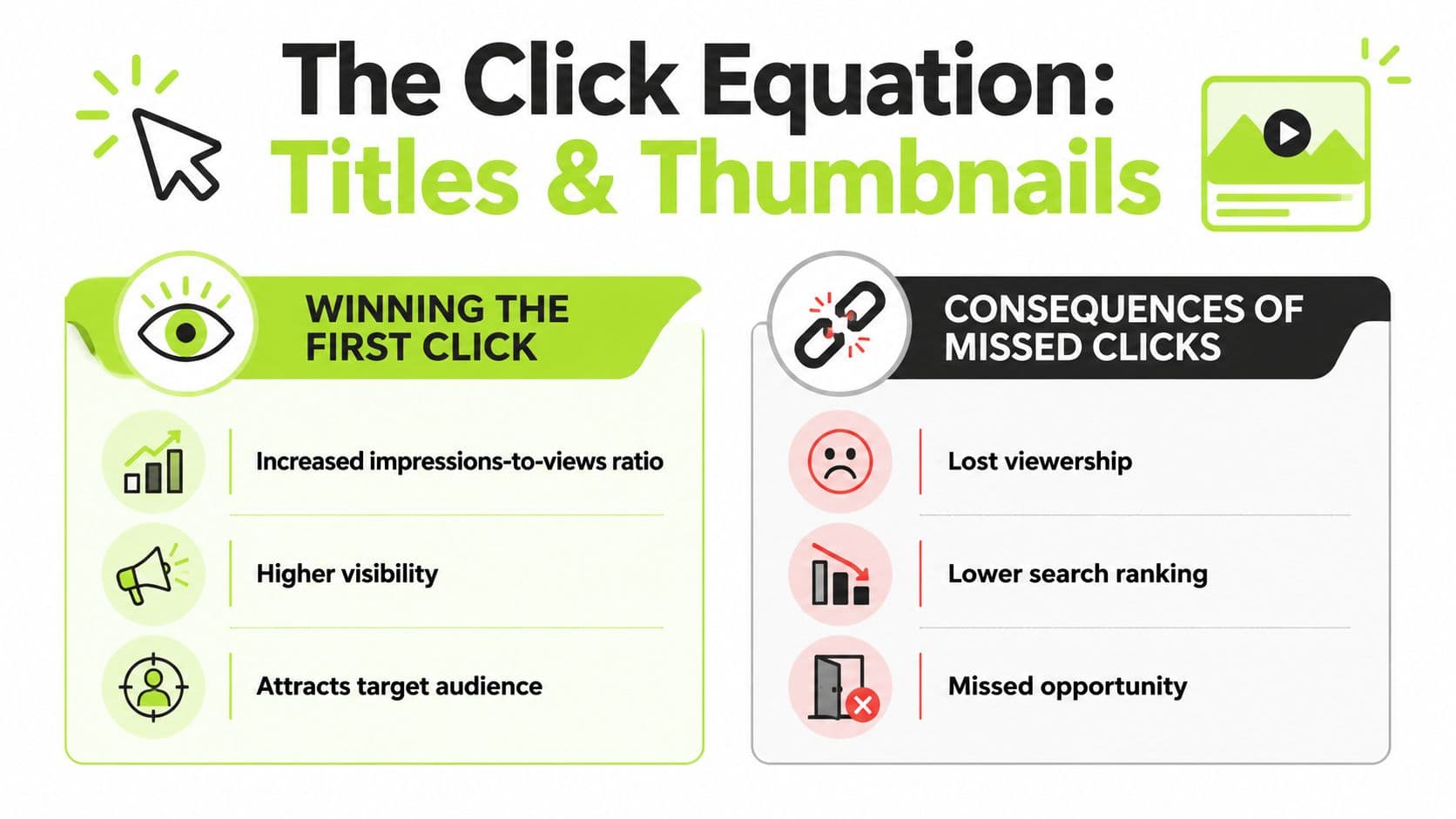
The platform's ranking process has an important 0 to 72 hour impression testing phase, and to pass it, a video's CTR should ideally exceed 8% according to this explanation of how YouTube videos rank. In that phase, your title and thumbnail aren't accessories. They are the test.
The package decides whether the video gets a chance
Creators love saying “content is king.” On YouTube, the package is the gatekeeper. If the thumbnail and title don't win the click, the video never gets the chance to prove its quality.
That changes how you should work. Don't finish the video and then scramble for a thumbnail. Build the package before production so the concept stays sharp.
Here's what strong packaging usually does:
| Element | What it should do | What usually fails |
|---|---|---|
| Title | Create clear curiosity around a specific outcome | Sound clever but vague |
| Thumbnail | Deliver instant visual contrast and emotion | Cram in too many ideas |
| Title and thumbnail together | Add up to one message, not two competing ones | Repeat the same words visually and textually |
If a stranger can't tell why your video matters within a glance, your packaging is still unfinished.
Build curiosity without becoming vague
The best titles don't just describe the topic. They frame the tension. The best thumbnails don't summarize the whole video. They dramatize the most emotionally loaded part of it.
A few practical trade-offs matter here:
A lot of creators also make the mistake of designing for themselves instead of for small-screen browsing. Shrink your thumbnail mentally. If the central idea disappears, the design is too busy.
If you want a deeper breakdown of visual packaging decisions, this guide on what makes a good YouTube thumbnail is useful because it focuses on the actual click mechanics rather than generic design advice.
Pre-testing helps too. Before filming, mock up three thumbnail-title combinations and ask which one promises the strongest payoff. That exercise often exposes weak angles early, when fixing them is cheap.
- Clarity beats cleverness: “How I Fixed Low Retention on YouTube” is usually stronger than a witty phrase nobody searches for.
- Emotion beats decoration: A face, a strong reaction, or a striking before-and-after usually beats a polished but generic design.
- One idea beats five: If the thumbnail needs explaining, it's overloaded.
Mastering Metadata for the Algorithm
Metadata is where many creators get weirdly lazy. They'll spend hours editing, then treat the title, description, and tags like an administrative chore.
That's backwards. Metadata tells YouTube what bucket your video belongs in. If the machine misreads the topic, your distribution gets blurry.
Descriptions should help the machine and the viewer
Descriptions matter most when they do two jobs at once. First, they reinforce the topic with plain language around the core keyword. Second, they make the video easier to use once someone lands on it.
A practical description structure:
Metadata won't rescue a bad video. But weak metadata can absolutely suppress a good one.
- Open with the main topic early: Don't bury the subject.
- Write a couple of useful paragraphs: Keep them readable, not robotic.
- Add timestamps if they improve navigation: Especially for tutorials and breakdowns.
- Include relevant links and resources: Only where they support the viewer experience.
Engineering Watch Time and Retention
Ranking gains usually stall here. Creators spend hours on keywords and packaging, then lose the session in the first 30 seconds.
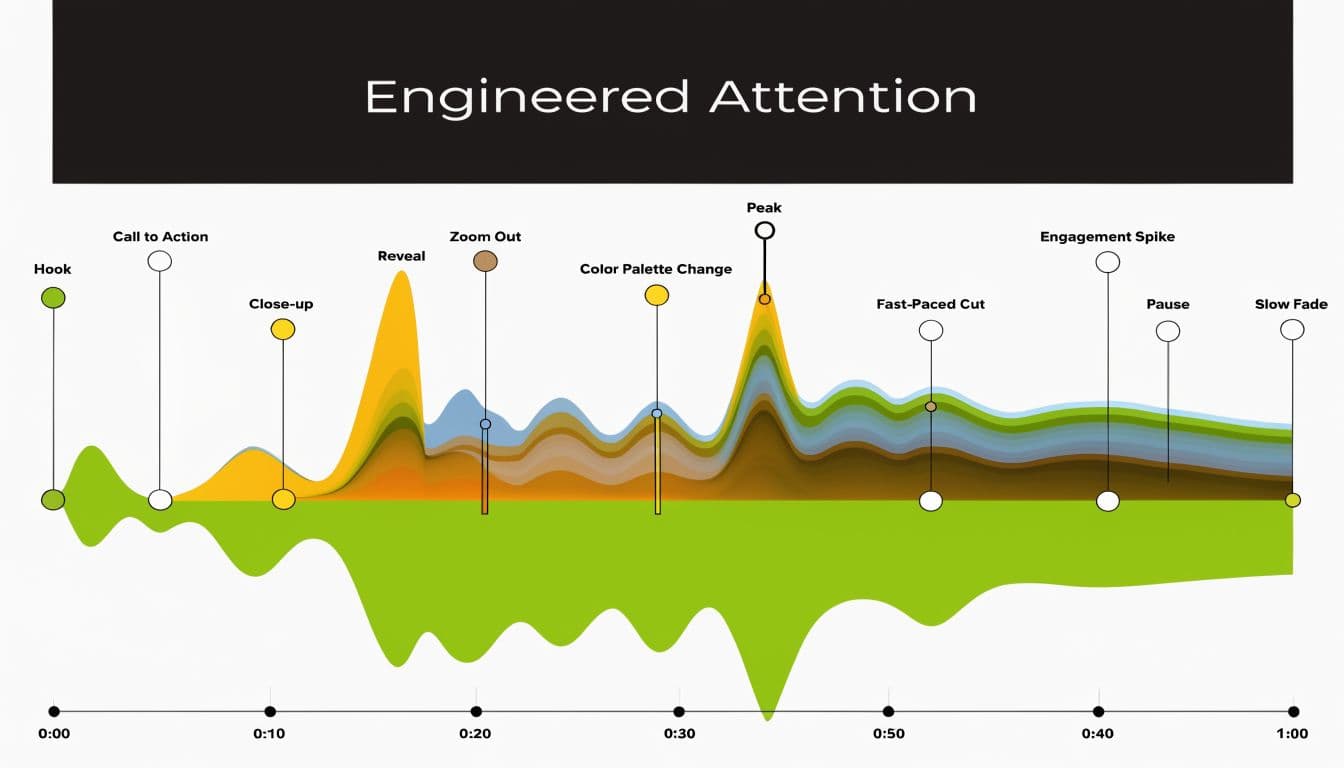
Watch time and retention are where the whole system either compounds or breaks. A strong title gets the click. The opening has to confirm that click fast. The middle has to keep creating reasons to stay. If any one part slips, the others stop pulling their weight.
Retention starts before the intro finishes
Poor retention usually starts with a mismatch, not weak effort. The thumbnail promises speed. The intro rambles. The title promises a result. The video opens with biography, branding, or throat-clearing. Viewers leave because the video did not start where their expectation started.
The fix is structural. Open with the result, the stakes, or the proof.
A strong first stretch does three jobs fast:
For example, a video titled "How I Ranked a New YouTube Channel in 30 Days" should not open with channel history and logo animation. It should open with the graph, the core move that changed performance, and what the viewer will be able to copy.
Your intro is where packaging and content meet. If they do not match, retention drops before the main video begins.
- Confirms the promise: Show the viewer they picked the right video.
- Establishes credibility: Use a result, example, or sharp insight instead of a long introduction.
- Creates an open loop: Give them a reason to stay for the next section.
What are the common questions?
What is the short answer for Guide to Ranking Videos on YouTube in 2026?
Master the complete system for ranking videos on YouTube in 2026. This playbook covers keyword research, hooks, metadata, watch time, and analytics.
What should creators do first?
Shares: Was there a moment, framework, or example someone would want to send to another person?
Who is this guide for?
This guide is for YouTube creators, faceless channel operators, agencies, and teams using AI tools to improve video production and growth.
Action checklist
Apply this to your channel today.
- 1Shares: Was there a moment, framework, or example someone would want to send to another person?
- 2Research before production: Don't shoot first and justify later.
- 3Package before publishing: Titles and thumbnails deserve upfront thinking.
- 4Edit for movement: Cut dead air, repetition, and delayed value.
- 5Review with honesty: Every dip, stall, and spike is feedback.
Sources & methodology
- Satura editorial guide based on the source video, topic cluster, and article sections.
- Source video reviewed for this article: https://www.outrank.so/