InVideo vs Pictory
InVideo vs Pictory: start with an idea or existing content?
Choose InVideo when a prompt or rough idea needs to become a first video draft. Choose Pictory when scripts, articles, presentations, recordings, or long videos need structured repurposing. Consider Satura when the output must continue into a complete YouTube production and growth loop.
Fact-checked against official InVideo and Pictory product, pricing, and help pages on August 2, 2026.
InVideo
Best for idea-to-video generation
Start here when a topic or creative brief should become a script, visuals, voiceover, subtitles, music, and a reviewable first cut through a prompt-led workflow.
Pictory
Best for source-to-video repurposing
Start here when scripts, URLs, documents, presentations, audio, recordings, or long videos need storyboards, transcript edits, stock, captions, voices, and clips.
Satura
Best for the YouTube operating loop
Start here when generation and editing must connect to clips, thumbnails, metadata, CTR, retention, RPM, channel health, and the next upload decision.
Feature and workflow comparison
InVideo vs Pictory at a glance
Both products now cover prompts, AI visuals, stock, voices, captions, editing, and team workflows. The useful distinction is what enters the system, how weak scenes are corrected, and how usage is priced.
| Decision | InVideo | Pictory | Verdict |
|---|---|---|---|
| Primary starting point | Starts strongly from an idea or prompt, then builds a script, visual sequence, voiceover, subtitles, music, and a first video draft. | Starts strongly from material you already have, including a script, article URL, document, presentation, audio file, recording, image, or uploaded video. | Choose InVideo when the input is a rough idea. Choose Pictory when the input is finished or reusable source content. |
| Prompt-to-video creation | Lets creators specify the idea, platform, length, audience, appearance, voice, and other details before generating a complete first draft. | Supports idea and text-to-video creation, then turns the generated or supplied script into a storyboard with matched visuals, audio, captions, and voices. | InVideo is the clearer first test for open-ended prompt creation. Pictory is the clearer first test when the prompt should become a structured storyboard for further source-led work. |
| Content repurposing | Can create videos from scripts and offers multiple AI workflows, but its strongest documented proposition is generating a new video from an instruction. | Has dedicated URL, script, document, PDF, PowerPoint, audio, recording, and long-video highlight workflows for converting existing material. | Pictory has the stronger documented repurposing surface. Test InVideo first when the source is only a topic, concept, or creative brief. |
| Editing model | Uses Magic Box text commands to change scenes, media, voiceovers, effects, styles, audio, accents, and aspect ratios in generated projects. | Uses a storyboard and transcript-led editor for cuts, silence and filler-word removal, caption changes, visual replacement, voiceover updates, and scene work. | Choose InVideo for conversational revision of an AI draft. Choose Pictory for document-style control over a script, transcript, storyboard, or recording. |
| Visual sources and models | Paid plans document access to more than 200 image, video, audio, and music models plus premium stock providers, with usage governed by credits and plan allowances. | Paid plans combine AI-generated media with Getty Images and Storyblocks libraries, with stock depth, AI credits, and generated-media allowances changing by tier. | InVideo offers broader model-led generation. Pictory offers a clear stock-backed repurposing workflow. Test licensing, relevance, correction time, and cost on the same brief. |
| Voice, captions, and language | Generates voiceovers, subtitles, and music as part of the first draft, documents voices in more than 50 languages, and supports plan-dependent voice clones and avatars. | Provides captions, translations, standard voices, ElevenLabs voice allowances, voice cloning, avatars, and transcript-based timing with plan-specific quotas. | Both cover narration and captions. Compare pronunciation, timing repairs, language support, quota usage, voice consistency, and export quality on a normal script. |
| Teams and scale | Individual plans separate from Team and Enterprise options; team plans add seats, shared credits, storage, stock allowances, admin controls, and higher concurrency. | Team plans add three or more users, shared workspaces, larger media and voice allowances, brand kits, onboarding, training, and enterprise API options. | Price the actual number of creators and reviewers. In both products, the cheapest individual plan is not a reliable proxy for a production team. |
| Usage and pricing model | Uses monthly credits whose cost varies by model, agent, duration, resolution, audio, and generation choice; official guidance says plan credits do not roll over. | Uses video-export minutes, AI credits, storage, voice quotas, stock access, brand kits, and user limits, with monthly and annual allowances structured differently. | Do not compare subscription price alone. Model cost per usable published video after retries, corrections, exports, voices, stock, and team access. |
| Best overall fit | Creators, marketers, and teams that want an AI agent to turn an idea into a fast first draft with broad generative model access and prompt-led revisions. | Creators, marketers, educators, and teams that repeatedly turn scripts, articles, presentations, recordings, or long videos into structured video assets. | There is no universal winner. The durable distinction is idea-to-draft versus source-to-video, followed by the correction and publishing work each output still requires. |
Decision paths
Choose around the input and final job
Choose InVideo
Best starting point when an idea needs a generated first cut.
- The team begins with a topic, prompt, campaign brief, audience, or rough concept rather than a finished source asset.
- Broad generative model access, AI visuals, voices, music, subtitles, avatars, and text-command revisions matter.
- A separate human review process can correct pacing, facts, visual relevance, brand choices, and final packaging.
Choose Pictory
Best starting point when existing content needs repurposing.
- The recurring input is a script, URL, article, document, presentation, podcast, webinar, recording, or long video.
- Transcript cuts, storyboards, captions, stock matching, highlights, and reusable brand controls define the work.
- The team values predictable source conversion more than open-ended generative model breadth.
Use both
Best only when prompt creation and source repurposing are separate jobs.
- Let InVideo own idea-led drafts and Pictory own repeated conversion of approved articles, scripts, presentations, or recordings.
- Assign captions, voice, brand styling, and final export to one product so the same asset is not corrected twice.
- Keep both only if the second subscription and handoff produce more publishable output than one standardized workflow.
Consider Satura
Best when video creation belongs inside a YouTube operating loop.
- Generation, browser editing, voiceovers, captions, clips, thumbnails, titles, and metadata should connect.
- CTR, retention, TrustScore, RPM, channel diagnostics, and the next upload decision matter after export.
- The bottleneck is running and improving a YouTube channel, not only producing a first draft from a prompt or source.
The input test
Test idea-to-video and source-to-video separately
A one-prompt demo favors a generative product. A polished article demo favors a repurposing product. Run both tests, then finish the publishable asset so the comparison includes correction work.
Start from one sentence
Give each product the same audience, topic, duration, platform, tone, facts, and visual constraints. Count the instructions and retries needed for a usable first cut.
Start from one approved script
Use the same finished script or article. Compare scene structure, visual relevance, narration, captions, brand application, and how easily weak sections can be repaired.
Finish the publishable video
Do not stop at generation. Correct facts, pacing, captions, voice, visuals, music, brand details, aspect ratios, and the final export before timing the workflow.
Pricing context
Compare the cost of usable published output
InVideo credits and Pictory allowances measure different work. Verify live checkout, then price the models, retries, stock, voices, exports, users, correction time, and extra tools a normal month requires.
| Product | Free access | Paid access | Cost check |
|---|---|---|---|
| InVideo | Free access is available with limited generation credits and plan restrictions. | Plus is listed from $17/month when billed annually, with 75 credits per month. | InVideo says plan and top-up credits reset on the billing cycle and do not roll over. Model, agent, output length, resolution, and audio choices can change generation cost, so verify the live pricing panel before purchasing. |
| Pictory | 14-day free trial with three video projects; downloads require a paid plan after the trial. | Starter is $29/month, or $25/month billed annually. | Pictory can change promotional prices, quotas, and plan packaging. Verify the official checkout before purchasing. |
| Satura | Free account with browser editing and limited exports; no credit card is required to start. | Starter is $29/month, with an annual equivalent from $17/month. | Paid plans bundle AI credits, export minutes, connected YouTube channels, and the wider production and growth toolset. |
Where InVideo is strong
A broad generative first-draft system
- Prompt-led first drafts that can combine scripts, generated or stock visuals, voiceovers, subtitles, music, and transitions
- Text-command edits for changing scenes, media, voiceovers, effects, styles, audio, and aspect ratios
- Access on paid plans to a broad model catalog plus premium stock providers, with plan-specific credits and allowances
- Dedicated workflows for faceless videos, explainers, ads, listicles, social content, avatars, and other prompt-led formats
Check before buying: Credits can be consumed at different rates by model, agent, duration, resolution, audio, and generation quality. Plan credits reset each billing cycle, and the official pricing page says model and agent prices can change. Prompt-led editing should be tested against the scene-level correction, asset replacement, pacing, and brand control a normal project requires.
Where Pictory is strong
A structured source-repurposing system
- Multiple source workflows, including text, scripts, URLs, audio, images, PowerPoint files, recordings, and uploaded videos
- Transcript-led editing for cuts, filler-word removal, silence removal, captions, visuals, and voiceover revisions
- Large licensed Getty Images and Storyblocks libraries on paid plans, with plan-specific asset access
- Brand kits, AI voices, caption tools, team workspaces, APIs, and enterprise training-video capabilities
Check before buying: Video minutes, AI credits, storage, premium voices, stock access, brand kits, and collaboration differ materially by plan. Pictory focuses on video creation and repurposing; YouTube-specific thumbnail, CTR, retention, and channel-health work may still need separate tools. Pictory says cancelled accounts lose platform project files, so finished videos and reusable assets should be downloaded before cancellation.
The YouTube third option
Connect video creation to the next upload decision
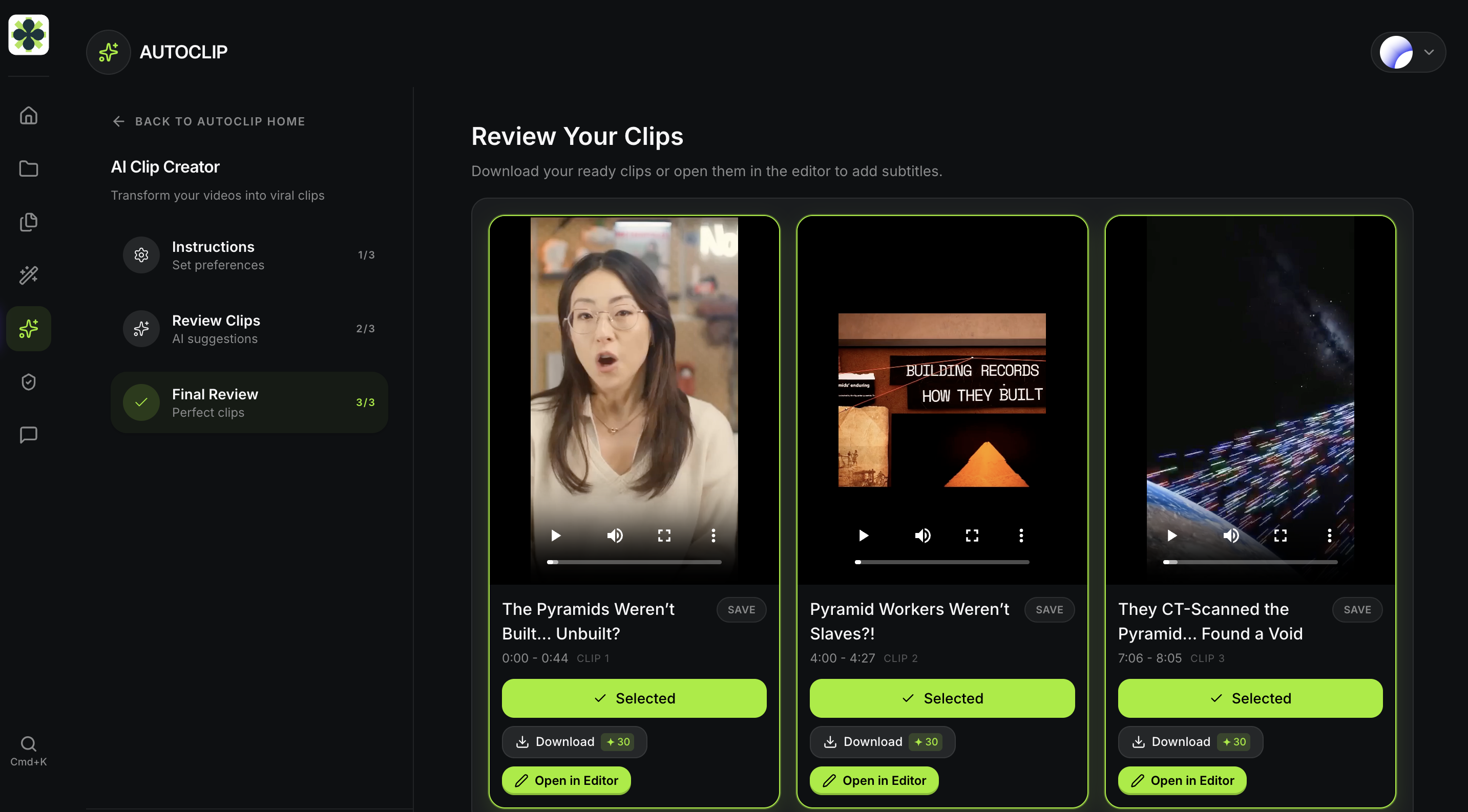
InVideo and Pictory can accelerate the first video asset. Satura is the alternative when that asset must connect to browser editing, clips, voiceovers, captions, thumbnails, metadata, CTR, retention, RPM, channel diagnostics, and what to make next.
Fair product test
Measure the entire publishable workflow
Measure first-cut speed
Time setup, generation, script changes, visual replacements, voice selection, caption cleanup, and the first version worth reviewing.
Measure correction load
Count factual repairs, irrelevant stock, generated-media retries, voice fixes, caption timing, pacing changes, and brand adjustments.
Measure source flexibility
Test an idea, finished script, article URL, recording, and long video only if those are real recurring inputs for the team.
Price the normal month
Include credits, models, stock, voices, exports, storage, users, failed generations, separate tools, and human revision time.
Official sources
Claims checked against first-party documentation
Product capabilities, models, credits, allowances, and prices change. These official pages were reviewed for this comparison; verify current checkout and account limits before purchasing.
InVideo vs Pictory FAQ
Common comparison questions
Which is better, InVideo or Pictory?
InVideo is usually the better first test when you want an AI agent to turn an idea or prompt into a complete first draft. Pictory is usually the better first test when you repeatedly turn scripts, articles, URLs, presentations, recordings, or long videos into structured video assets. Test the same real input and measure correction time rather than choosing from feature count alone.
What is the main difference between InVideo and Pictory?
The clearest difference is the starting point. InVideo emphasizes idea-to-video generation with broad models and conversational revisions. Pictory emphasizes source-to-video conversion and repurposing through scripts, URLs, documents, presentations, recordings, transcripts, storyboards, and highlights. Both products now overlap across generation, voices, captions, stock, and editing.
Is InVideo or Pictory better for YouTube automation?
InVideo is stronger when YouTube automation starts with generating a faceless or explainer draft from a prompt. Pictory is stronger when it starts with repurposing an approved script, article, presentation, podcast, webinar, or existing video. Neither product removes the need for originality checks, editorial judgment, thumbnail and title packaging, publishing review, and performance analysis.
Is InVideo or Pictory better for turning articles into videos?
Pictory is the clearer first test because it documents dedicated URL-to-video, blog-to-video, script, document, PDF, and presentation workflows. InVideo can work from scripts and prompts, but its strongest documented workflow is generating a new video from an idea. Compare both with a normal article and count scene, visual, narration, and caption repairs.
Is InVideo or Pictory easier to edit?
Ease depends on the editing model you prefer. InVideo uses text commands to revise generated scenes, media, voiceovers, effects, styles, and aspect ratios. Pictory uses a storyboard and transcript-led workflow for text cuts, silence and filler-word removal, captions, visuals, voices, and scene changes. Test the repair work you perform most often.
Is InVideo or Pictory cheaper?
Their pricing units are not directly comparable. InVideo uses credits whose consumption varies by model, agent, duration, resolution, audio, and generation choice. Pictory combines video-export minutes, AI credits, voice allowances, stock access, storage, brand kits, and users. Price a normal month of usable published videos, including retries and correction time, and verify current checkout before buying.
Do InVideo and Pictory have free plans?
InVideo provides free access with limited generation credits and restrictions. Pictory currently offers a 14-day free trial with three video projects rather than a permanent free production tier. Limits, watermarks, downloads, credits, and promotions can change, so verify the official pricing pages on the day you test.
Can I use InVideo and Pictory together?
Yes, but only when they own different recurring jobs. InVideo can own prompt-led concept drafts while Pictory owns repeatable conversion of approved scripts, articles, presentations, or recordings. Assign captions, voice, brand styling, and final export to one product, then confirm that the handoff saves more time than it creates.
Related comparisons
Continue the workflow comparison
InVideo AI alternative
Compare InVideo directly with Satura across prompt drafts, editing, captions, thumbnails, Shorts, pricing, and YouTube analytics.
Read comparisonPictory alternative
Compare Pictory directly with Satura across source conversion, transcript editing, stock, pricing, publishing, and channel growth.
Read comparisonVEED vs CapCut
Compare two broader editors across browser and native workflows, captions, AI tools, clips, teams, pricing, and social production.
Read comparisonYouTube AI tools
Map generation, voice, editing, captions, clips, thumbnails, packaging, analytics, and automation into one creator stack.
Read comparison