What is the quick answer?
Translation from english to german with audio - Master English to German translation with audio using this step-by-step workflow for natural-sounding dubbed
Key takeaways
- Why English to German Audio Translation Is a Pipeline, Not a Button
- The six stages behind a good dub
- Preparing the Source Audio and Transcript
- Clean the audio before anything else
- Tighten names, numbers, and jargon
- AI Dubbing vs Human Dubbing vs a Hybrid Workflow
Overview
You're staring at the last export of a video that's otherwise ready to ship, and the German dub is the one thing that can still save it or sink it. That's the reality of translation from English to German with audio for creators, the work isn't “click translate,” it's a production chain with prep, transcription, translation, voice, export, and QA.
Why English to German Audio Translation Is a Pipeline, Not a Button
The first time a creator finishes a video and realizes the German dub will decide whether the upload lands or flops, the temptation is to treat the whole thing like a shortcut. Upload the file, pick German, download the result. That can work for a clean clip, but most real projects fail later, at the seams between steps.
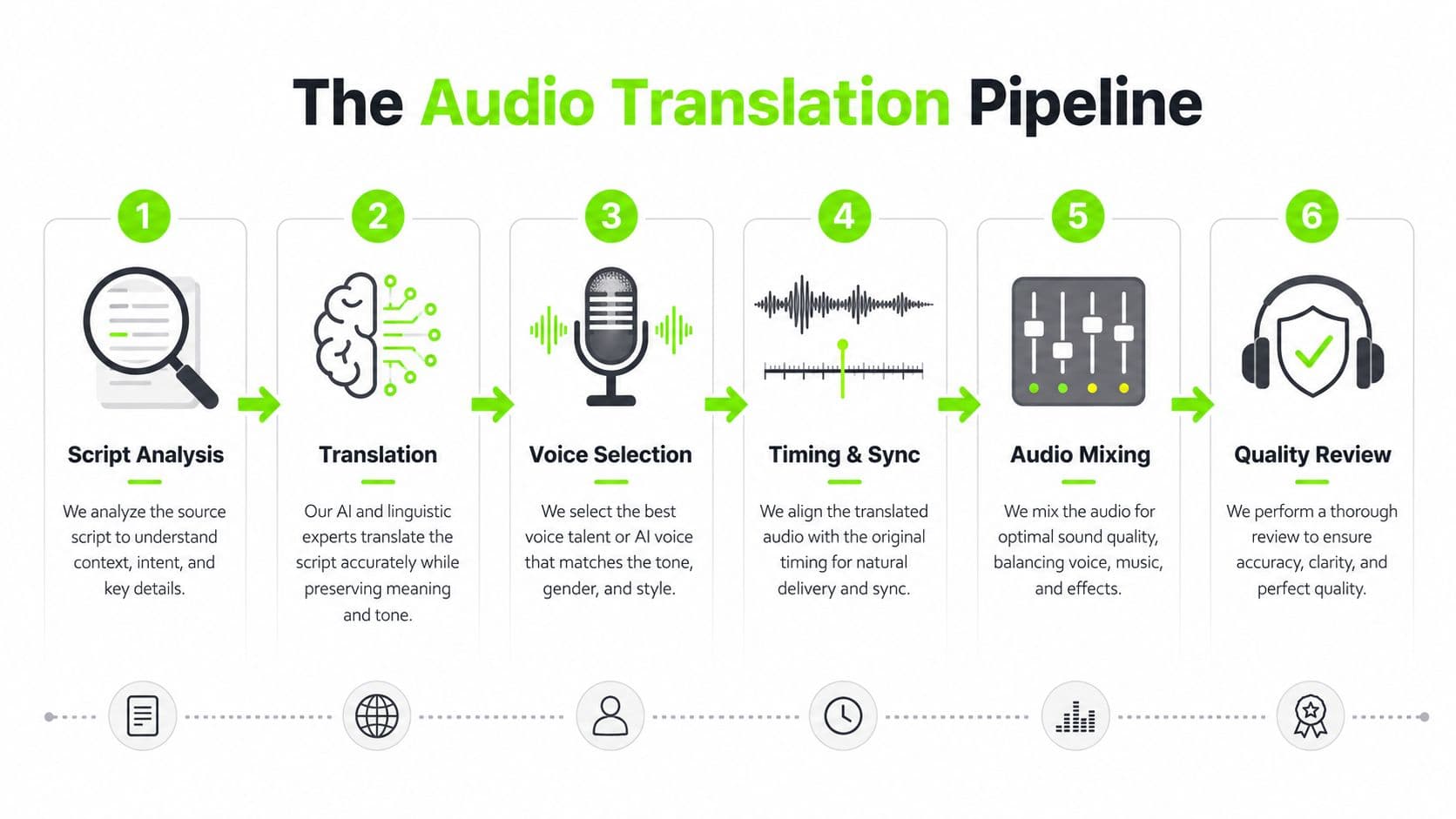
The six stages behind a good dub
The pipeline is simple to name and easy to ignore: clean the source, transcribe English speech, review the transcript, translate for meaning, generate German voice output, then run a final listening pass. That order matters because each stage depends on the one before it. If the transcript is weak, the translation inherits the mistake. If the timing is off, the voice track will still sound wrong even when the German words are accurate.
That's why a good English-to-German workflow feels closer to editing than to machine translation. A creator can get away with rough input for a caption file, but audio exposes every bad choice fast, especially when a line runs too long or the tone doesn't fit the speaker.
Practical rule: if you wouldn't publish the English version without a quick listen, don't trust the German version without the same care.
For a broader voice-over reference that sits well next to this workflow, the Translators USA voice translation guide is useful because it frames voice translation as a process, not a magic button.
When a video is a good candidate right now, it usually has one clear speaker, controlled background sound, and a transcript that already reads cleanly. When it has overlapping voices, music bleed, or a lot of jargon, the pipeline still works, but only if you respect the prep stage instead of skipping straight to output. That's the difference between a dub that sounds posted and a dub that sounds produced.
Preparing the Source Audio and Transcript
The worst German audio I've heard usually wasn't ruined by German at all. It started with messy English, noisy recordings, or a transcript that let too many errors slip through. The fix is boring, but it saves time everywhere downstream.
Clean the audio before anything else
Remove HVAC rumble, hiss, echo, and music bleed before transcription. Those sounds make speech recognition less stable, and once the transcript starts wobbling, every later step has to compensate. The same goes for overlapping speakers and low-gain recordings, which tend to create transcript gaps that look harmless until the translated dub starts drifting.
A creator who records in a bedroom studio can often improve results with one pass of cleanup and one honest listen through headphones. That's not glamorous, but it's better than trying to rescue a German track after the fact. The translation stage can only do so much when the source is muddy.
Tighten names, numbers, and jargon
The other danger is the transcript itself. Names, brand terms, acronyms, model numbers, and jargon need to be spelled and punctuated exactly the way you want them before translation starts. If the English transcript guesses wrong, German output can make the mistake sound confident.
A small review here pays off more than people expect. A five-minute transcript check often prevents a half hour of re-recording, re-timing, and fixing pronunciation later. For a workflow that centers transcript cleanup before translation, the Satura transcription workflow fits naturally into this part of the job.
Clean input beats clever output. If the English transcript is unstable, the German voice track usually inherits the mess.
The pre-flight checklist is short. Listen for noise. Verify names and numbers. Check whether speakers overlap. Confirm the transcript uses the exact terms you want in German. If any of those are shaky, pause before translation. The prep step is where a German dub gets saved, not where it gets “optimized.”
AI Dubbing vs Human Dubbing vs a Hybrid Workflow
Creators usually talk about “AI dubbing” as if it's one thing, but the actual choice is bigger than that. You're deciding how much control, speed, and voice identity you want to preserve, and those trade-offs are different for a podcast than for a Shorts channel.
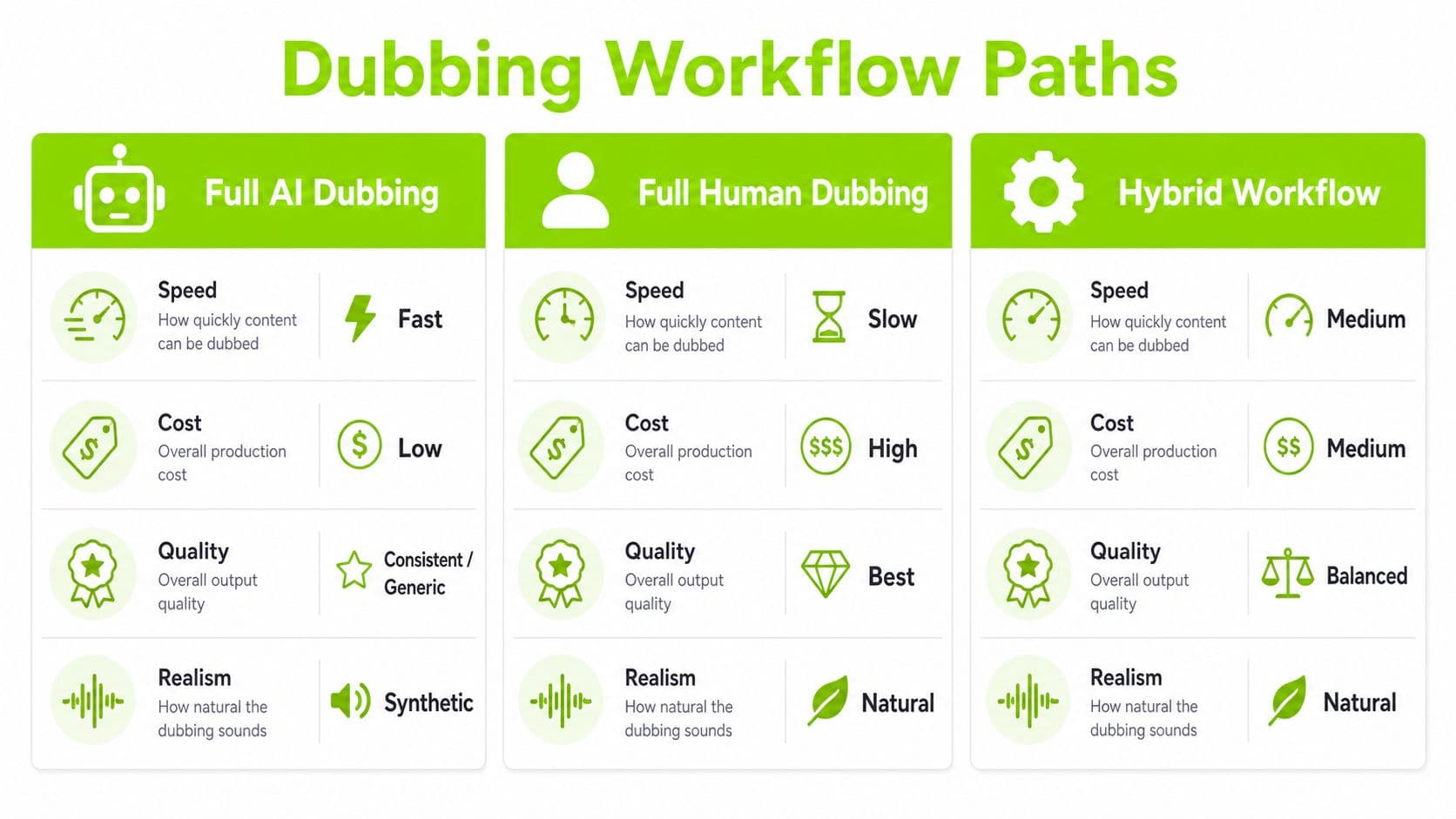
Full AI, full human, and the middle ground
Full AI dubbing is the fast path. It's the right fit when turnaround matters more than a handcrafted performance, and it's often the easiest way to keep up with a content calendar. The downside is obvious to any viewer who listens closely, the result can feel generic, especially on longer files or more emotional delivery.
Full human dubbing is the opposite. The voice sounds natural, the timing can be shaped line by line, and brand tone is easier to protect. The cost is time and effort, and scaling it across a lot of uploads gets difficult quickly.
Hybrid workflow is where many creators end up. AI handles the first pass, then a human reviewer cleans pronunciation, timing, and brand-critical lines. It's the most practical compromise when you want speed without giving up all voice control.
That distinction matters for German, because the audience notices when a dub sounds like a machine stopped at the first pass. If the content is short, repeatable, and informational, AI can be enough. If the content depends on personality, the hybrid path usually gives you more room to protect the speaker's identity.
For teams looking at privacy-conscious tooling around voice work, the privacy-first voice workflow is a relevant reference point because it highlights how some creators think about audio handling before they even get to German output.
One of the cleaner file-based options in this space is Satura AI's voiceover workflow, which sits in the same category as other creator tools that generate speech tracks for video. The important part is not the label, though. It's whether the workflow lets you keep control over the lines that matter most.
Translating for German, Not for Google Translate
Literal English-to-German translation fails loudly when the sentence sounds natural in English but stiff in German. German listeners hear that immediately. A phrase can be grammatically correct and still sound like it came from a machine that never watched the original video.
Meaning first, then wording
A line like “at the end of the day” usually shouldn't stay as a word-for-word expression in a dubbed video. The better move is to preserve the intent, not the surface phrasing. The same applies to filler words, false urgency, and overexplained transitions, all of which often need trimming before they become German audio.
Formality also matters. Choosing between Sie and du changes the whole feel of the video. If the channel speaks casually to viewers, a stiff formal register can make the dub feel distant. If the original content is professional or instructional, casual wording can feel sloppy.
Keep the German audience in mind
German viewers are also sensitive to awkward wording around names, brands, and dates. Some English product names should stay untouched because changing them creates confusion. Other lines need German conventions around numbers and dates so the text reads like it belongs to the market, not like it was translated for a spreadsheet.
The fastest way to spot a bad AI translation is to read it aloud. If the sentence looks fine in the transcript but sounds unnatural in the mouth, it probably won't survive dubbing. That's where human cleanup still earns its keep.
For creators comparing how localization changes across languages, the Spanish-to-English video translation workflow is a useful contrast because it shows how much the target language shapes the final edit.
Translate for the viewer, not for the source sentence. If the German line sounds like English wearing German clothing, rewrite it.
A solid rule is simple. Protect meaning, preserve the speaker's intent, and keep the German line short enough to sound spoken rather than translated.
Picking the German Voice and Getting Timing Right
Voice choice is where a lot of otherwise decent dubs start to feel off. The words may be correct, but if the voice doesn't match the creator's style, the whole video loses trust fast.
What are the common questions?
What is the short answer for Translation from English to German with Audio?
Translation from english to german with audio - Master English to German translation with audio using this step-by-step workflow for natural-sounding dubbed
What should creators do first?
Match the format to the job
Who is this guide for?
This guide is for YouTube creators, faceless channel operators, agencies, and teams using AI tools to improve video production and growth.
Action checklist
Apply this to your channel today.
- 1Match the format to the job
- 2Think about the import path too
- 3Final QA, Common Mistakes, and Quick Answers
- 4The checklist that catches most misses
- 5Quick answers creators keep asking